Our botanical Archive No. 001
I'd love to hear what's going on in your garden. I hope this can serve as a sort of show n' tell moment. I'll be posting updates and documenting my journey—not only for myself, but hopefully for anyone else who is just beginning to embark on their own.
June 18, 2026
An Introduction to My Own Messy Patch in Progress
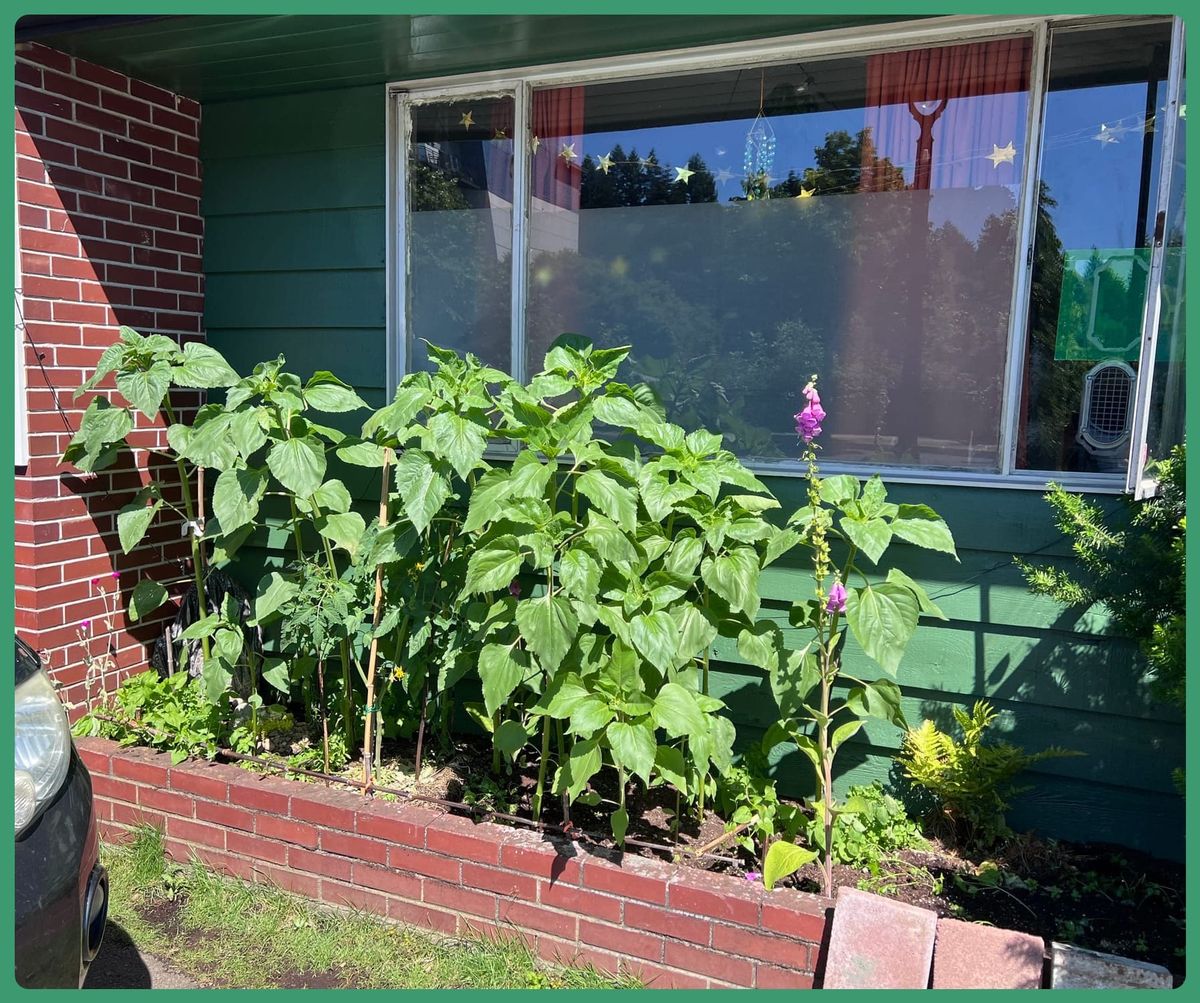
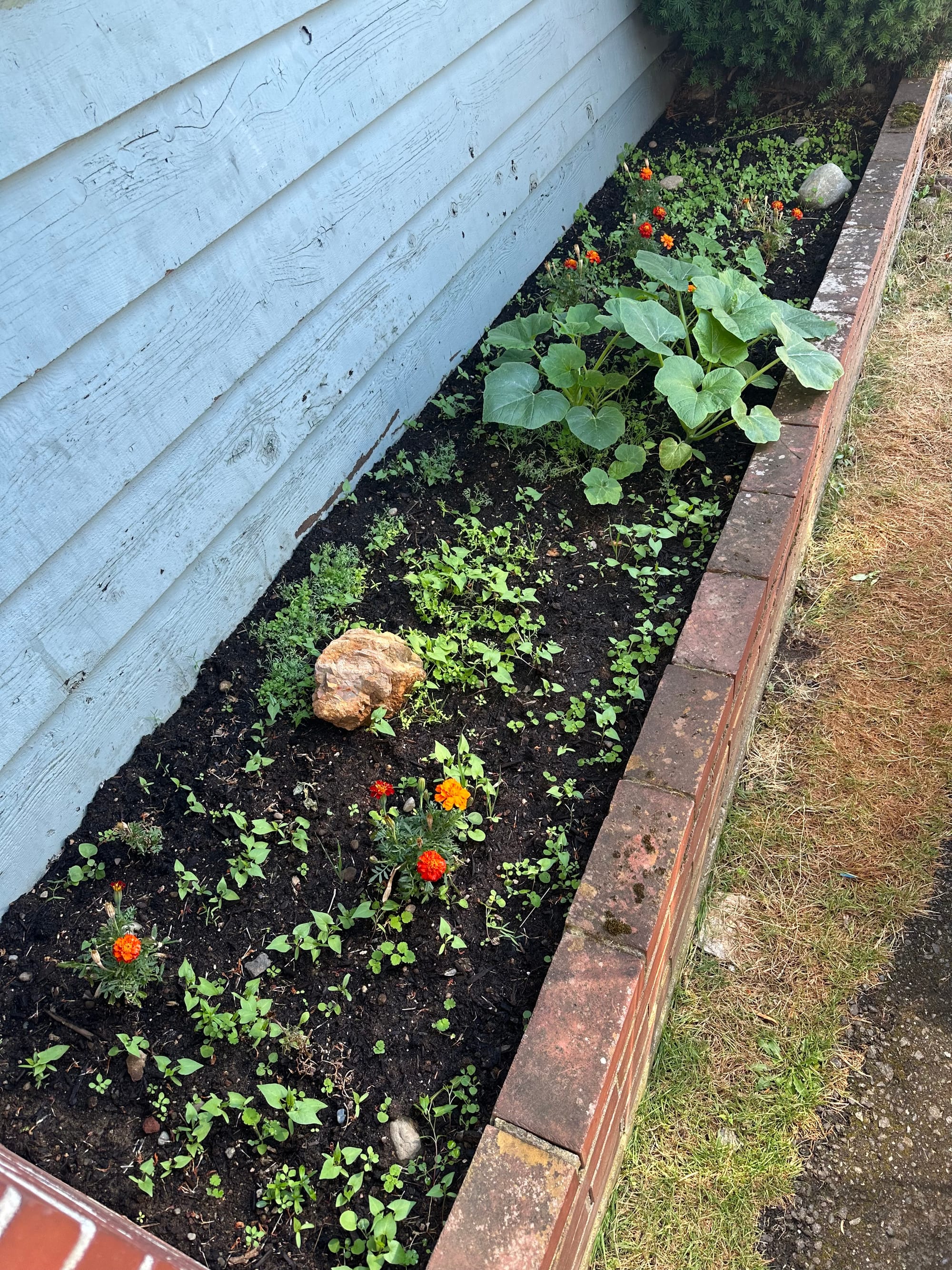
Most of my own gardening over the past few years has been constrained to our humble little flower bed.
Three feet by nine feet.
Not particularly impressive.
But enough.
My family has lived around Bothell for around seven years. When we moved in, the flower bed wasn't bare, but it definitely lacked a loving hand. There were a couple dead varieties of plants I hadn't the care to research at the time.
Amy and I tried unsuccessfully to bring in new life during those first few seasons.
Still, those early attempts seeded something else in me.
A return to a way of thinking that had been shown to me by my grandfather.
A true Englishman in the gardening sense.
He would spend hours tending his garden. Inside his greenhouse was the workings of true beauty. Not only functional plants, but ornamentals as well. Seedlings of more variety than I could fathom as a child.
What I remember most is the smell.
A smell I'd unknowingly carry with me to this day.
And maybe, in some small way, this garden has been my attempt to find it again.
Learning the Soil
Working the soil and tending to the "land"—my three foot by nine foot oasis—over these last few years has made me slow down.
I stopped just planting.
And started paying attention.
At first, I simply wanted fertile soil.
We began adding compost and new soil every year.
I had started reading about no-dig gardening and wanted to cultivate something living beneath the surface, though old habits die hard. Every spring I still took my spade and physically turned the flower bed, folding compost and soil into the earth.
This year will be different.
The soil itself has changed.
What was once dry, clay-like, and lifeless has become crumbly and loose.
The worms have returned.
We've let the weeds grow and self-seed through winter.
We've stopped fighting every inch of growth.
And for the first time, Amy and I looked at our flower bed and felt as though we'd cultivated something more than plants.
A place where things choose to stay.
The Garden Gets Out of Hand
Naturally, our plans for this year were simple.
An herb garden.
A few sunflowers.
Something practical.
Something beautiful.
And honestly, even now that sounds like a perfectly reasonable plan—
if only plans stayed simple.
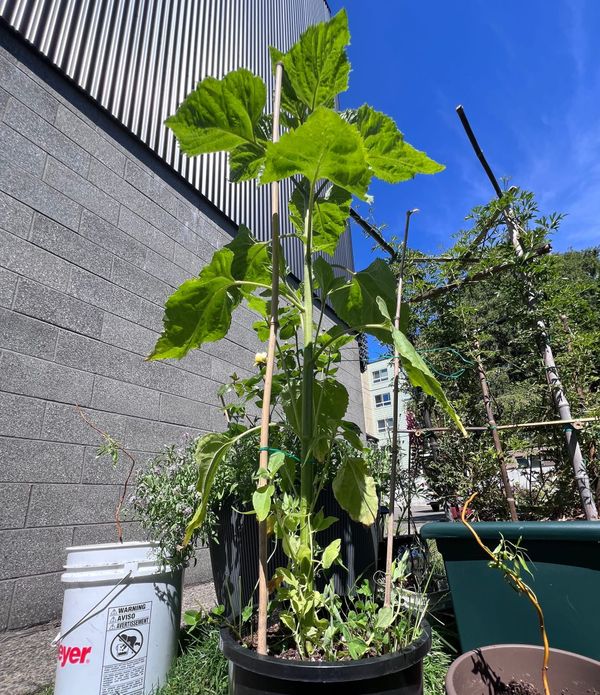
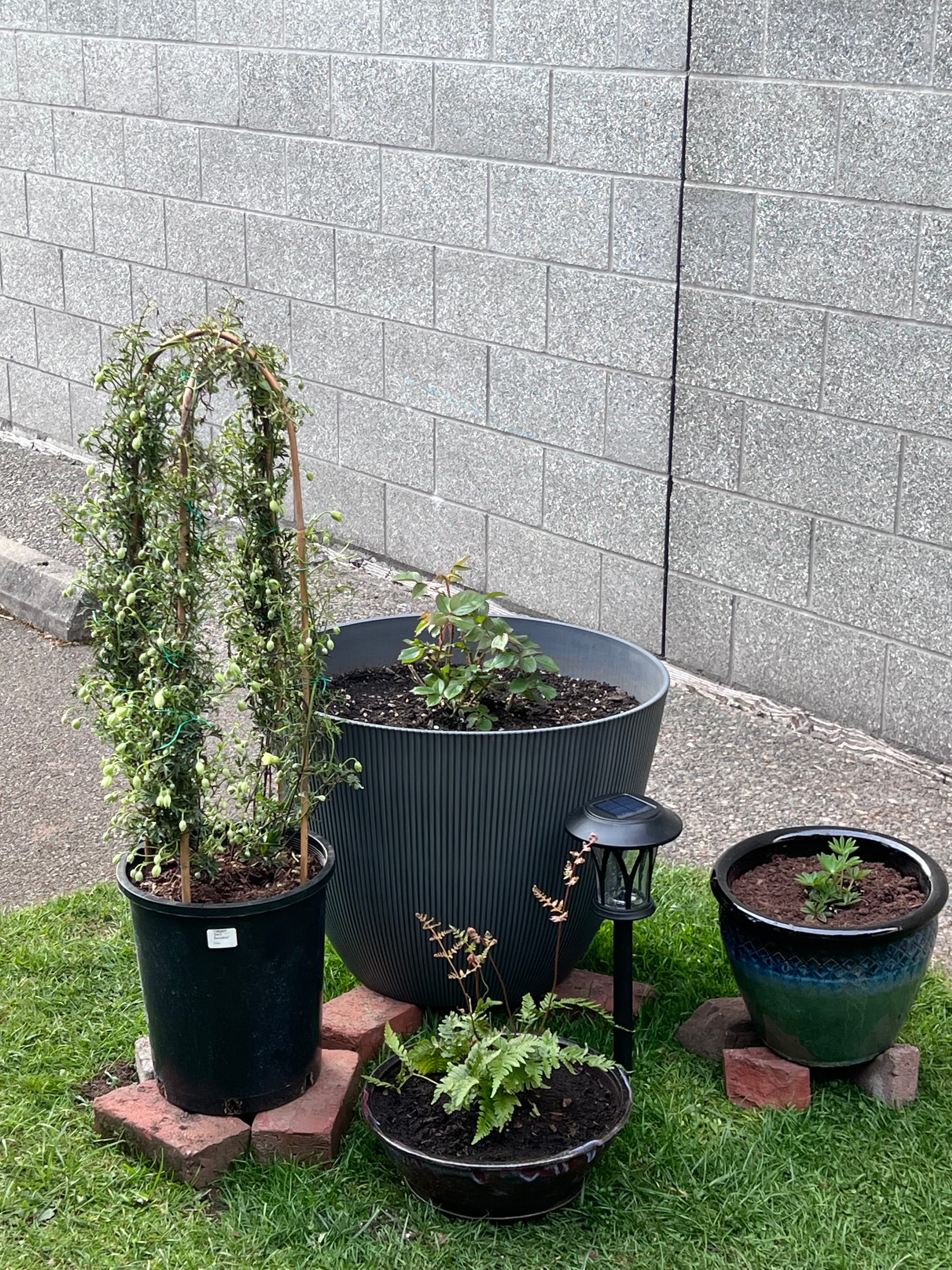
During those first spring trips to Home Depot and Flower World, I had recently developed a fascination with container gardening. One pot became two, and two somehow became the beginnings of an entire bloom cycle I'd convinced myself was perfectly sensible.
First came the Hybrid Tea Rose.
Eternal Flame.
A brilliant yellow.
I immediately imagined a ring of Alyssum beneath her—Royal Carpet—as a living mulch. Tiny flowers spilling over the edges of the pot, softening the soil and keeping her company.
But then things seemed lonely.
As I'm sure many gardeners can relate, it felt unfair to have one proud young rose standing alone while everything around her waited to bloom.
Soon enough there was the Lupine.
Gallery Red.
Perfect for a teal glazed pot I hadn't a clue what to do with.
At this point I'd already bitten off more than I could chew.
But I was enchanted.
I had begun thinking less about individual plants and more about timing.
When would the alyssum bloom?
Would the rose flower long enough?
Could the lupine bridge the gap?
I found myself trying to create a little sequence of color.
A tiny bloom cycle.
A place where something would always be flowering.
A place where pollinators might stop to visit.
A place that something besides us might enjoy.
Though, tucked among all of those grand ambitions is a humble fern.
No flowers.
No spectacle.
Just dependable green.
I've found myself appreciating it more than I expected.
A quiet reminder that not everything in a garden needs to announce itself to be important.
Of course, this is where gardening starts to reveal your true madness.
Because instead of stopping there—
I immediately knew I needed one more thing.
What it was, or how it would happen, was all that remained to be discovered.
Enter, The Clematis Rescue
Clematis, Early Sensation.
Or more accurately:
A shelf of dead clematis at Costco during what should've been a routine grocery trip.
I was asked to refrain from buying another plant.
A perfectly reasonable request.
But I was stopped.
A full display of clematis.
Something felt wrong.
I started moving pots aside.
Dead stems.
Dry leaves.
And buried in the middle—
a glimpse of green.
So there I was, dismantling a Costco display of dead plants trying to rescue the survivor hidden in the middle.
I'm forever grateful for Amy, always willing to follow me down whatever rabbit hole I've uncovered this week.
Needless to say:
This was absolutely not buying another plant.
This was a rescue.
And I stand by that.
Learning to Stay Outside
Once everything was planted, the only thing left to do was water and wait.
Or—
if you're recently unemployed and slightly obsessive—
you wander outside fifteen times a day.
Check the rose.
Look at the clematis.
Watch the lupine.
Admire the fern.
Pull a weed.
Notice one new leaf.
Amy jokes that I've found a new group of girls.
But I think what I've really found is something I forgot I needed.
More time outside.
No good reason.
No task list.
Just the quiet practice of paying attention.
More often than not, I find these visits bettering me mores than the other way around.
Sometimes I notice something needs a little drink.
Sometimes it's a bindweed trying to escape my makeshift trellis.
But more often than not, I find myself slowing down enough to notice that the garden isn't the only thing changing.
Returning
I spent much of my childhood in my grandfather's garden.
I didn't understand then what he was building.
I thought he was growing plants.
Now I think he was growing a relationship with the world around him.
And perhaps that's what I've been trying to return to all along.
Especially here in Washington.
Where the winters are long.
Where people talk about the Seattle Freeze.
Where darkness can feel heavier than we'd like to admit.
And yet every spring—
we thaw.
A little at first.
Then all at once.
The light changes.
The garden wakes.
And somehow,
so do we.
I'd love to hear what's going on in your garden.
I hope this can serve as a sort of show n' tell moment.
I'll be posting updates and documenting my journey—not only for myself, but hopefully for anyone else who is just beginning to embark on their own.
I started this with nothing more than cherished memories, a small patch of soil, and a tradition I hope to pass forward to the people I love.
No matter your experience, you are invited to contribute.
Or simply to observe.
To find comfort in the idea that this is only ever as complicated as we make it.
Where we go is not often where we start.
I'm simply taking the initiative to begin.
And if you'd like, you're more than welcome to join along and see where we go.
Together we can share the memories that brought us here, the things we hold dear, and the aspirations of where we'd still like to grow.
Thank you for taking the time to read this.
If any of it resonates with you—
you are here,
and we are together.
Times are hard.
But I believe that through plants, and tending to our small corners of the earth in whatever ways available to us, there is community.
Uncovering those connections is my hope for this archive.
However you've arrived—
you are welcome here.
—
Continuity through community.